The report
Reports → Web Patches (/admin/reports/webpatches, permission
View the Web Patches report) is one page with four parts, top to bottom.
Patching sources
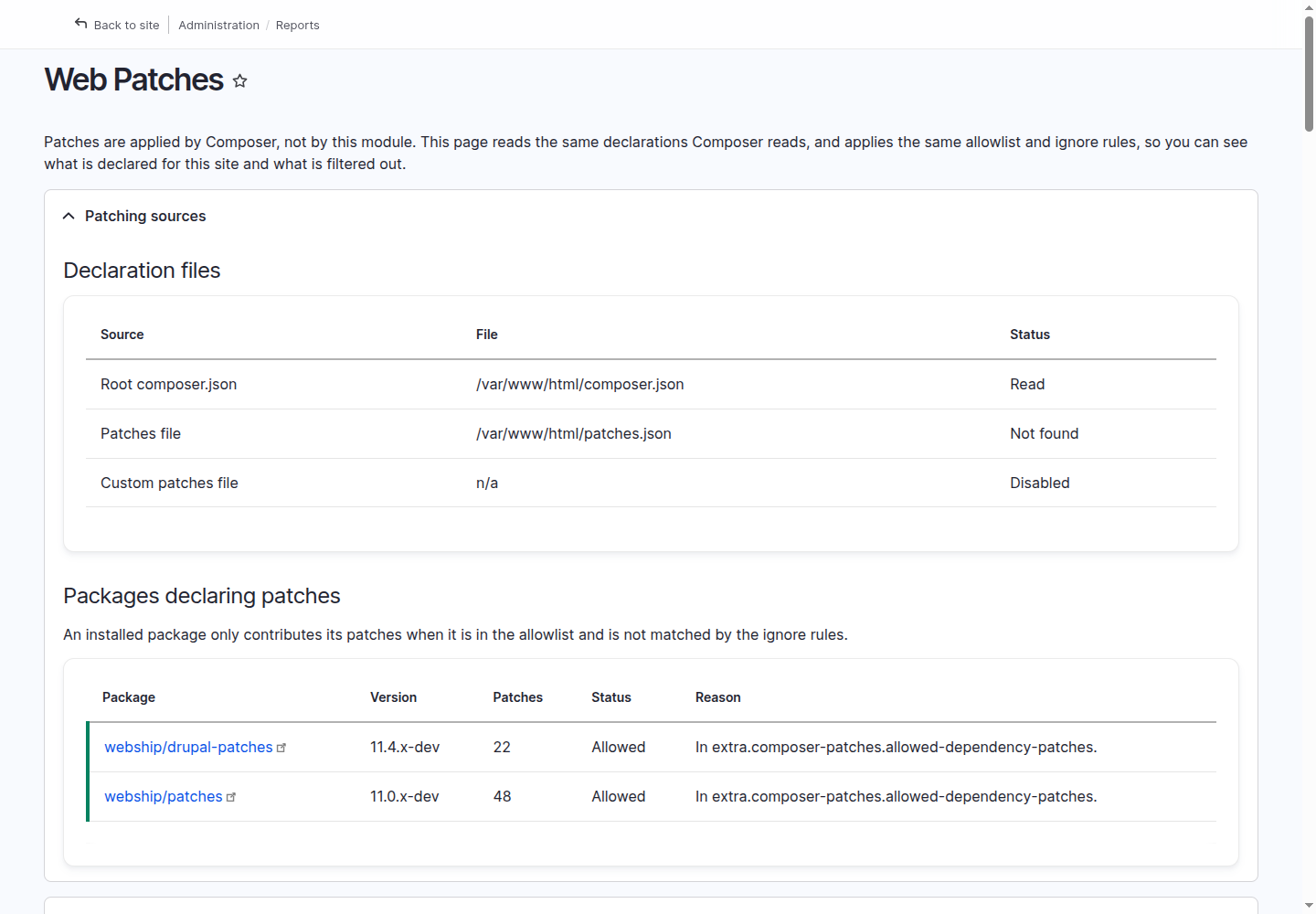
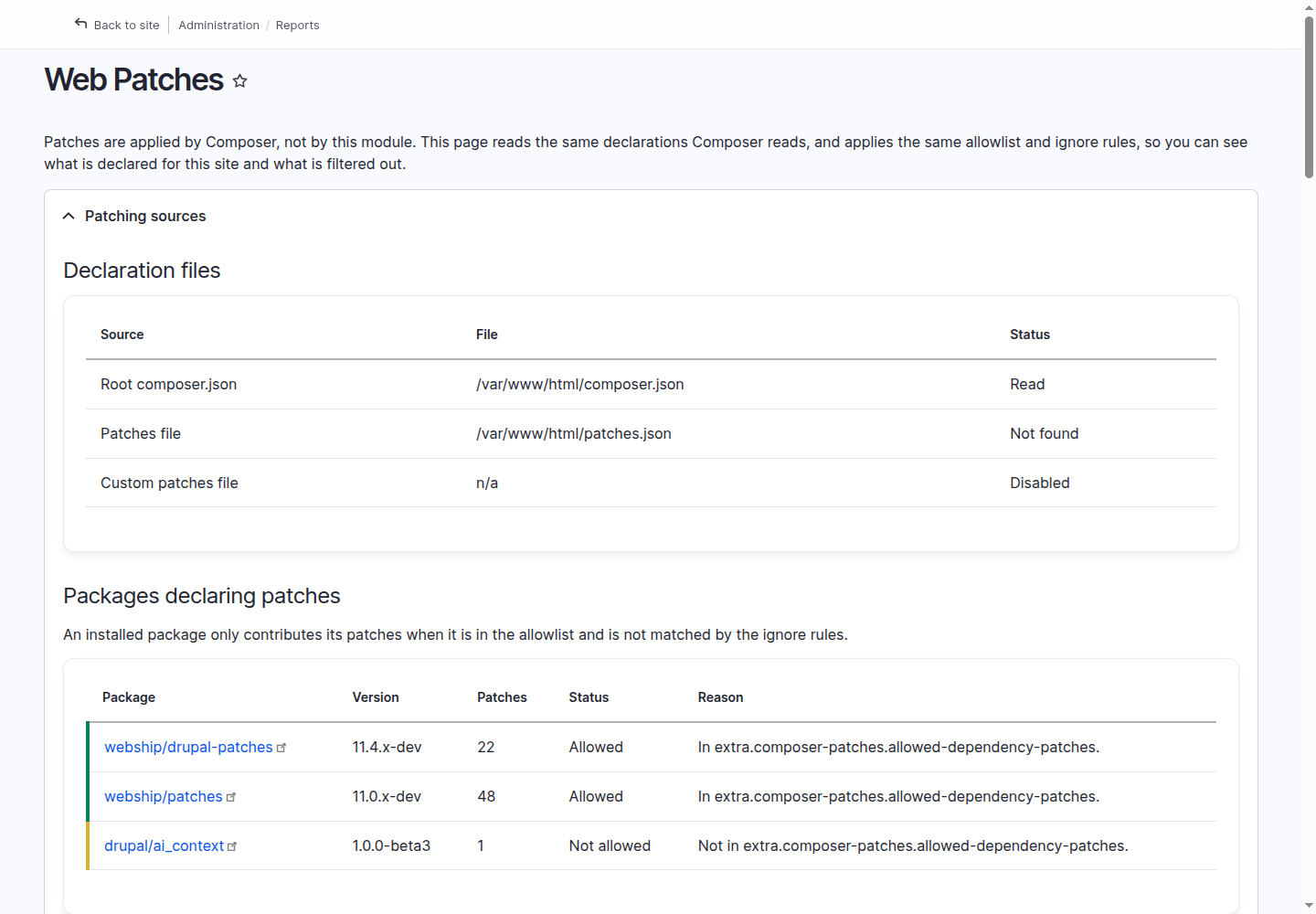
Two tables:
- Declaration files — each file the report reads (the root
composer.json, the Composer Patches patches file, the optional custom file), with its path and whether it was read, not found, or disabled. - Packages declaring patches — every installed package that carries
extra.patches, with its version, how many patches it declares, and the allowlist verdict: Allowed or Not allowed, with the reason.
An installed package only contributes its patches when it matches
extra.composer-patches.allowed-dependency-patches and is not matched by the
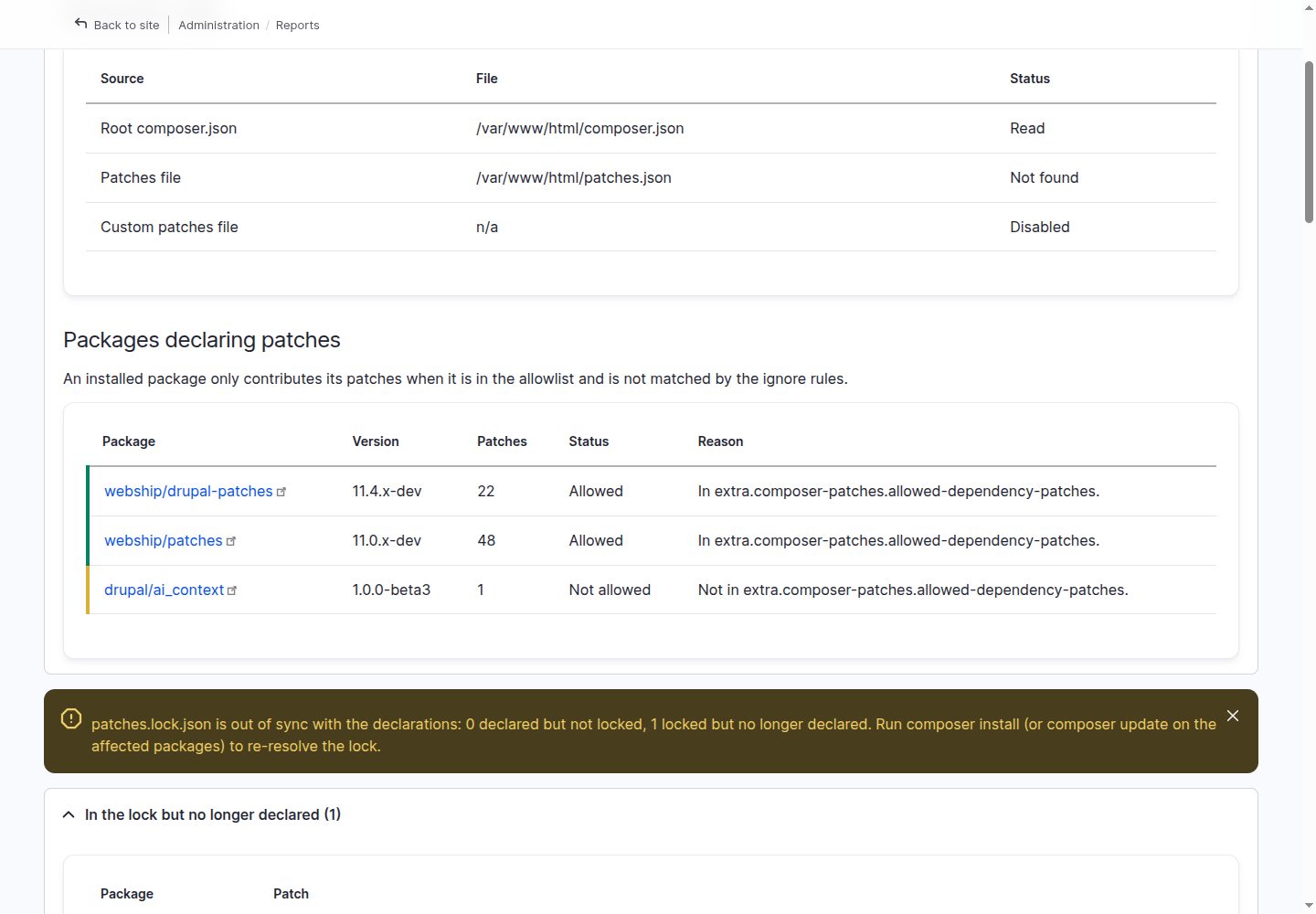
ignore rules. A module that ships its own patches — the
AI Context module declares a
Drupal Canvas patch in its own composer.json, for example — shows up here as
Not allowed unless the site allowlists it, and its patch is never applied:
The patch lock
Composer Patches v2 resolves the declarations into patches.lock.json and
applies from that lock, so the report compares the two on every load:
- In sync — a status line with the patch count.
- Missing — a warning that the lock does not exist (normal on Composer Patches v1, which keeps no lock file).
- Out of sync — the differences listed both ways: declared but not in the lock, and in the lock but no longer declared — with the composer command that re-resolves it.
The comparison always uses the full declared set; the only installed packages display filter never affects it.
Patches
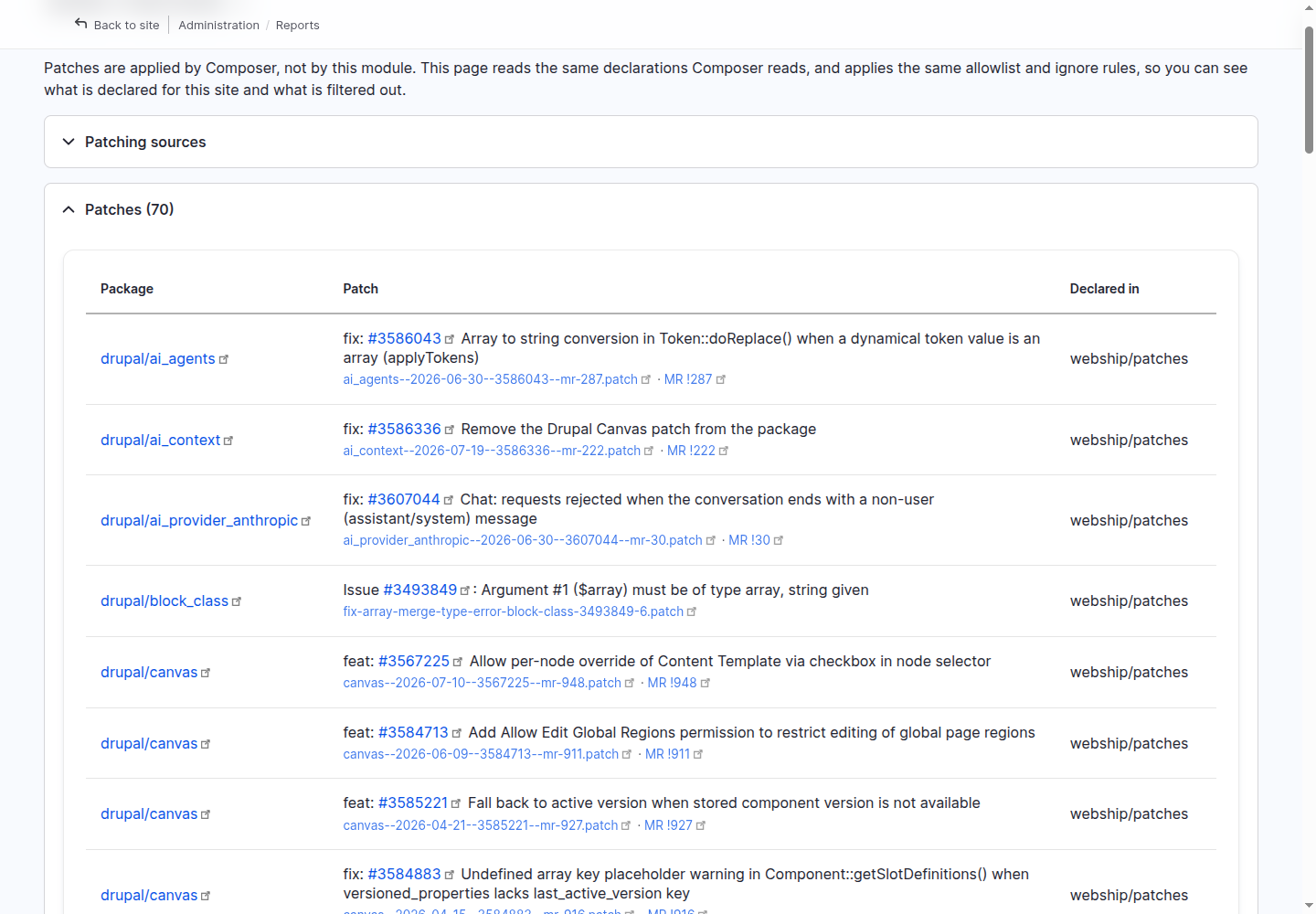
Every declared patch, fully linked:
| Link | Where it goes |
|---|---|
| The package | its drupal.org project page (drupal/core maps to the drupal project; non-Drupal packages go to Packagist) |
The #1234567 in the description |
the drupal.org issue |
| The patch file name | the patch file itself |
| MR !id | the merge request on git.drupalcode.org, when the file name carries --mr-<id> |
The Declared in column names the source: a declaration file, or the dependency package that contributed the patch.
Ignored patches
Every declared patch that is not applied, with the reason: the declaring
package is not in the allowlist, it is matched by
extra.composer-patches.ignore-dependency-patches, or the patch URL is listed
in extra.patches-ignore.
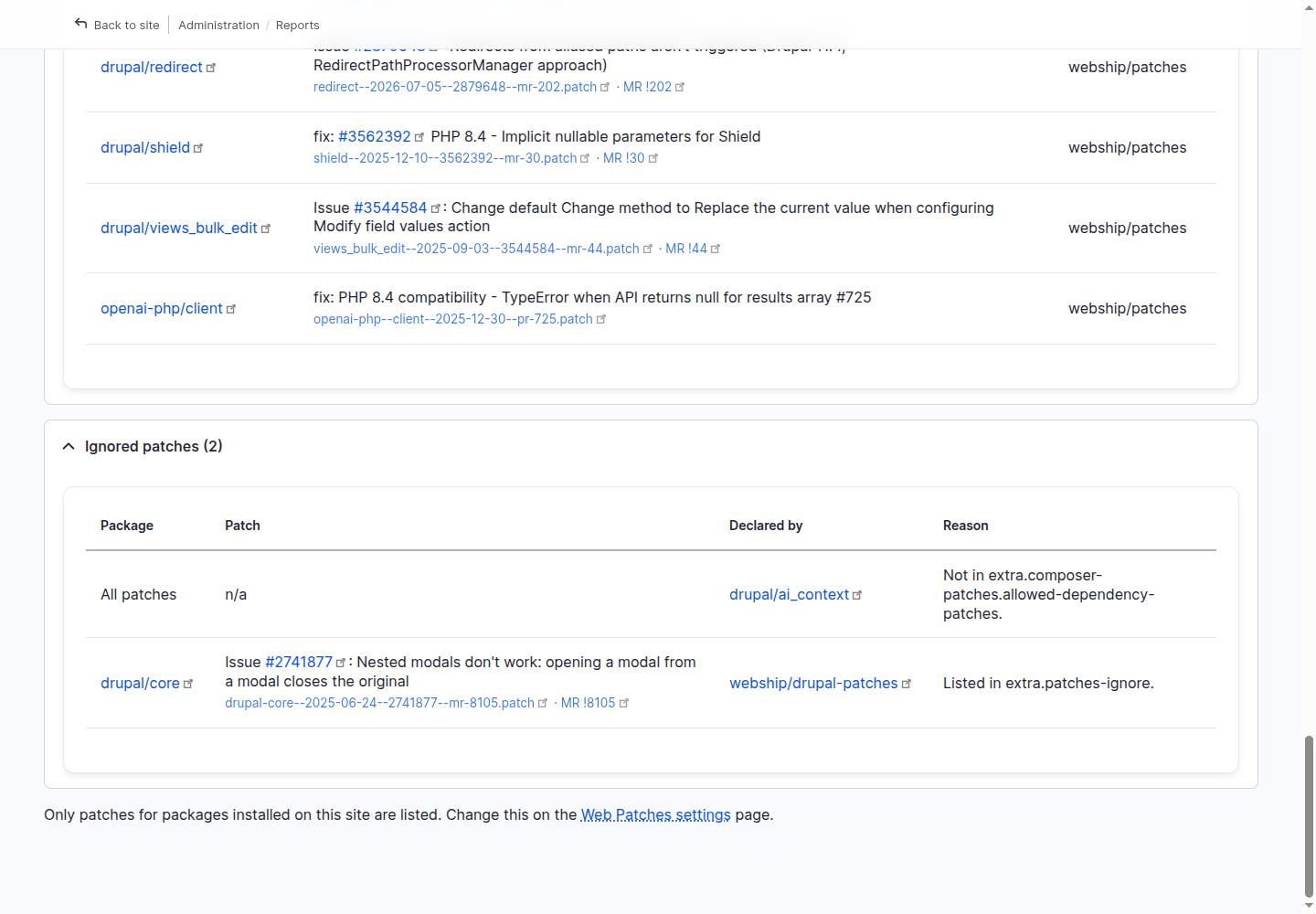
Here drupal/ai_context is not in the allowlist, so all of its patches
are blocked with one row, while a single Drupal core patch declared by
webship/drupal-patches — the nested modals fix — is dropped by
extra.patches-ignore, still fully linked to its issue, file and merge
request.
By default the report lists only patches for packages installed on the site — a note at the bottom says so and links to the settings.